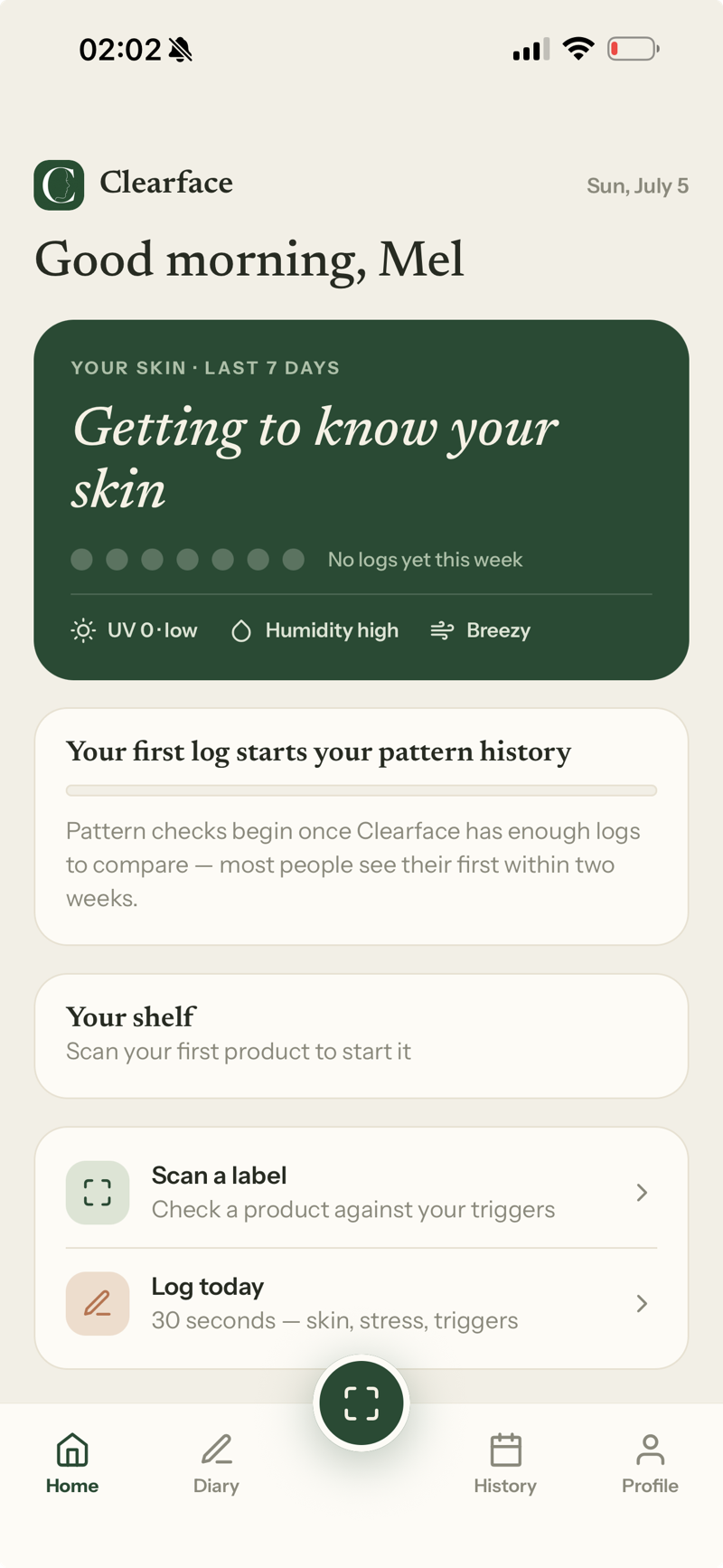
Scan any skincare or food product and see which ingredients are commonly noted in rosacea — with a plain-English note on why. Log a 30-second check-in each day, and Clearface shows you honest patterns from your own logs: triggers, weather, even how things change after starting a treatment.
Free. No ads, no tracking. Educational — not medical advice.
Every feature exists to answer one question: what does your skin respond to?
Point your camera at any barcode. Clearface flags ingredients commonly noted in rosacea-prone skin — personalised to your subtype, severity, and triggers — and explains each one in plain English. You decide what goes on your shelf.
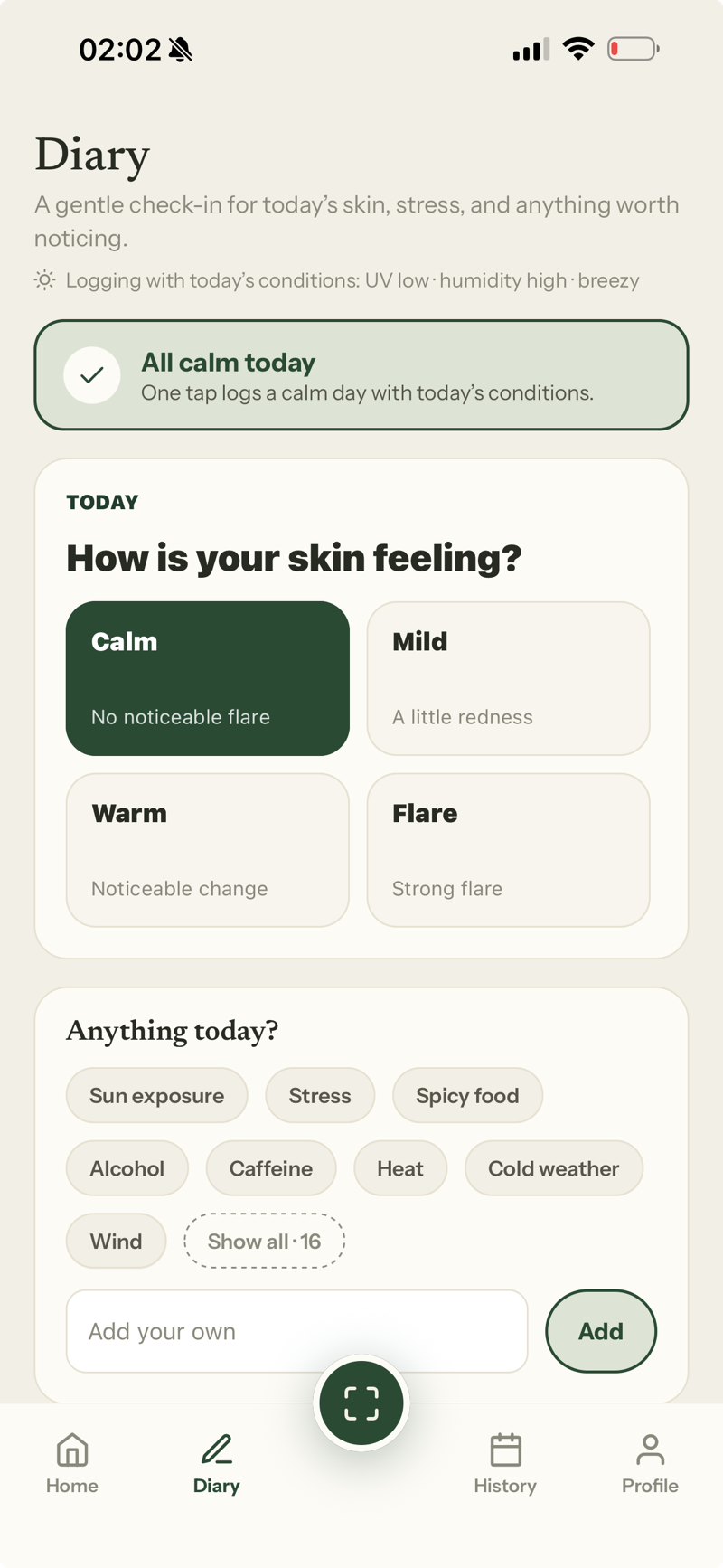
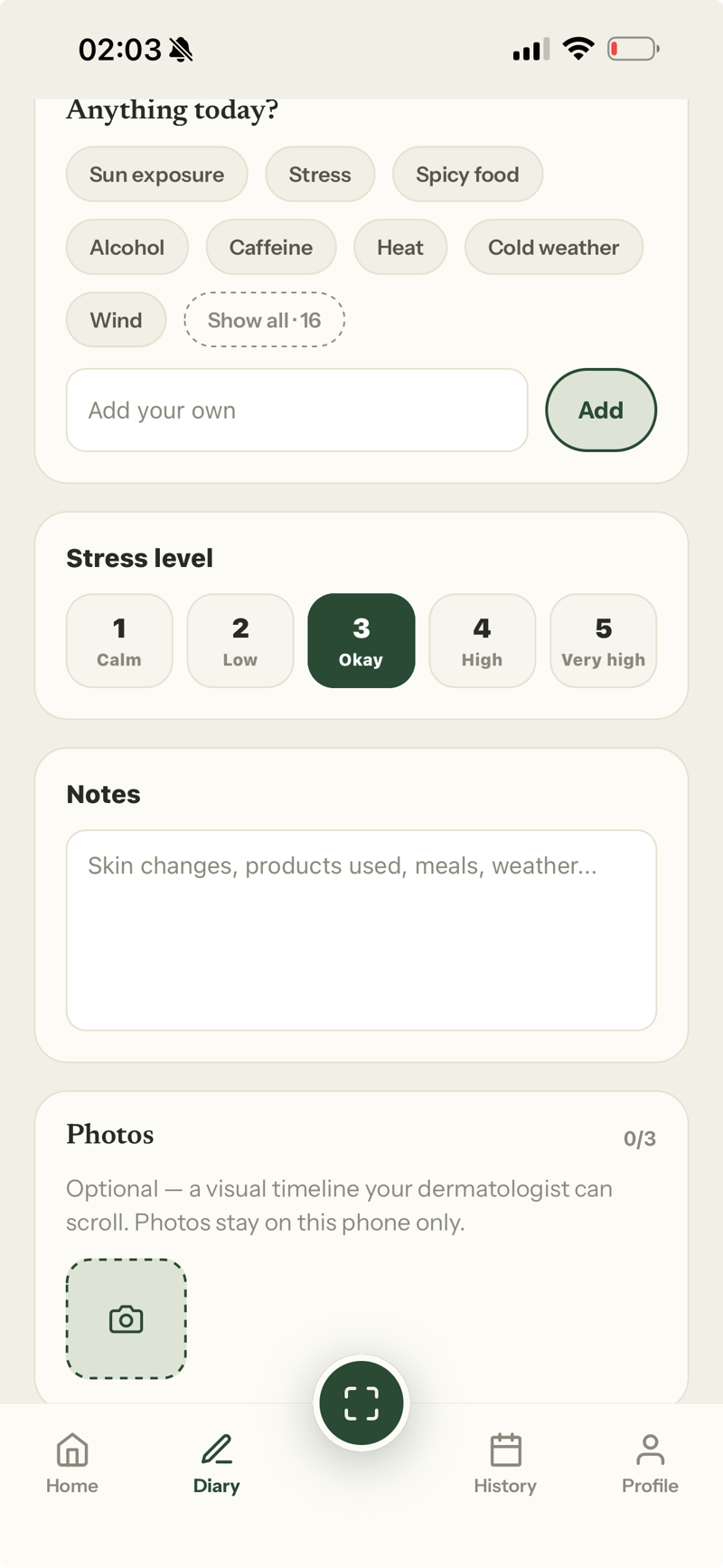
Calm day? One tap logs it. Flare day? Capture where it showed, what might be connected, and your stress — while Clearface quietly attaches today's UV, humidity, and wind.
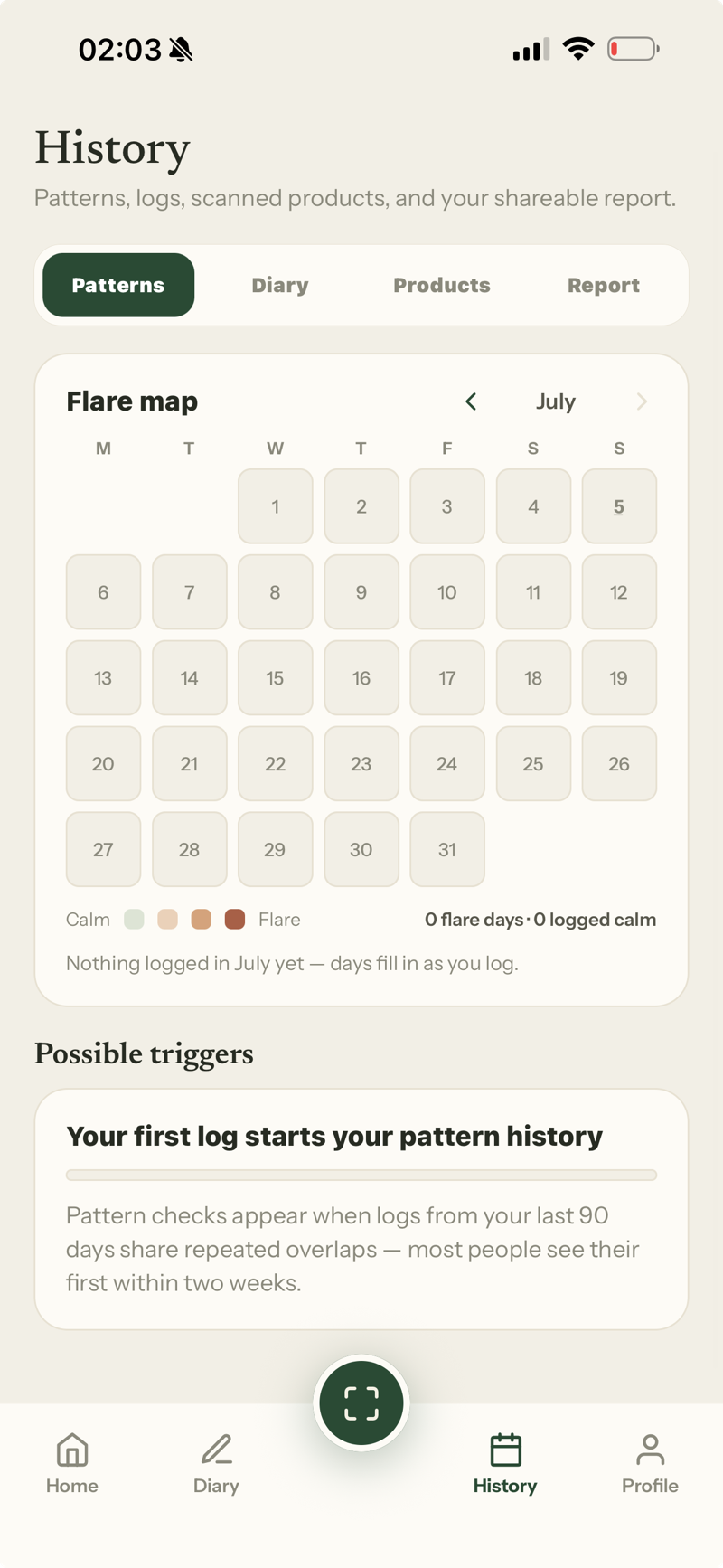
Your month at a glance, and pattern checks that only speak when your own logs repeat — "Alcohol appeared in 3 of your redder days" — always labelled as overlaps, never as diagnoses.
Started a prescribed treatment? Track it and watch your own numbers: "flare days per week — 3.1 the month before, 1.4 since." Your record for the conversation that matters, never advice.
One tap builds a skimmable PDF of your last 90 days: flare frequency, the calendar, affected areas, treatment response, and possible patterns. Walk in with evidence, not memory.
Product not found? Photograph its ingredients label and Clearface reads it for you — then every user who scans that barcode benefits. Built by people with rosacea, for people with rosacea.


Calm days take one tap

Your month, at a glance

Detail when you want it
No advertising SDKs, no analytics trackers, no data brokers. Your data exists to power your own tracking — nothing else.
Optional photos are stored only on your device. Not uploaded, not synced, not in reports. Nobody can see them — including us.
One button removes your account and every trace of your data from our servers and your device. No emails, no waiting.
Use Clearface entirely on your device. Sign in only when you want backup and sync — your choice, whenever you're ready.
Read the full Privacy Policy — it's written to be read.
Your subtype, severity, and known triggers — under two minutes, and every scan becomes personal to you.
Point your camera at any barcode. Log a calm day in one tap, or a flare in thirty seconds with where, what, and how stressed.
Plain-English notes on each flagged ingredient, personalised to your profile. Label what's safe for you — Clearface never decides for you.
As logs accumulate, Clearface surfaces repeated overlaps — triggers, weather, treatment response — and turns them into a report your dermatologist can actually use.
A note on honesty: Clearface is an educational tracking tool, not a medical device. It never diagnoses, never predicts your skin's response, and never tells you a product is safe — skin is too individual for that. What it does is keep an honest, organised record of your skin so you and your dermatologist can make better-informed decisions together.
No. Clearface is an educational tracking tool. Ingredient notes are based on general research about rosacea sensitivities, and patterns are summaries of your own logs — not diagnoses or treatment guidance. Always talk to a qualified dermatologist about medical decisions.
Clearface is free. No ads either — we may add optional paid features someday, but nothing you've saved will ever be taken away.
No. The app works fully on your device without one. An account adds backup, sync across devices, and community features like adding missing products — you can sign in whenever you're ready.
Nowhere. They're stored only on your phone — never uploaded, never synced, never included in reports. Deleting an entry deletes its photos.
Add it in about a minute: photograph the ingredients label and Clearface reads it for you (or type it). From then on, every Clearface user who scans that barcode gets the analysis instantly.
Clearface looks for repeated overlaps in your last 90 days of logs — a trigger, weather condition, or item that keeps appearing near your redder days. It needs a couple of weeks of logging to start, and it always labels findings as overlaps in your own data, not confirmed causes.